


Dental crowns in London

Treatment
1 hour per crown

Price
From £1,600

Team Experience
60+ years

Recovery Time
1+ day

Google Rating
★★★★★ (4.9)
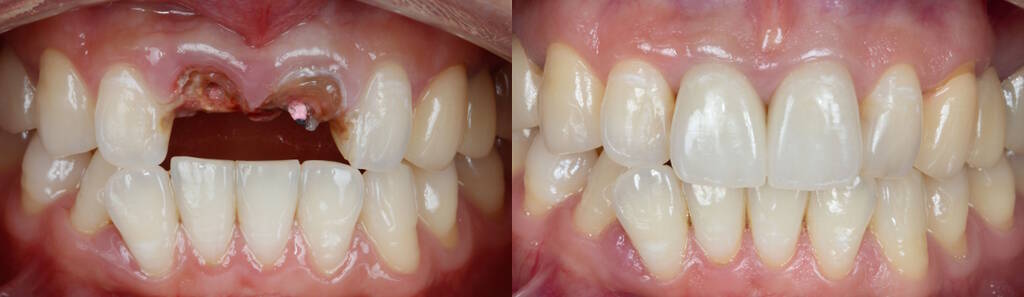
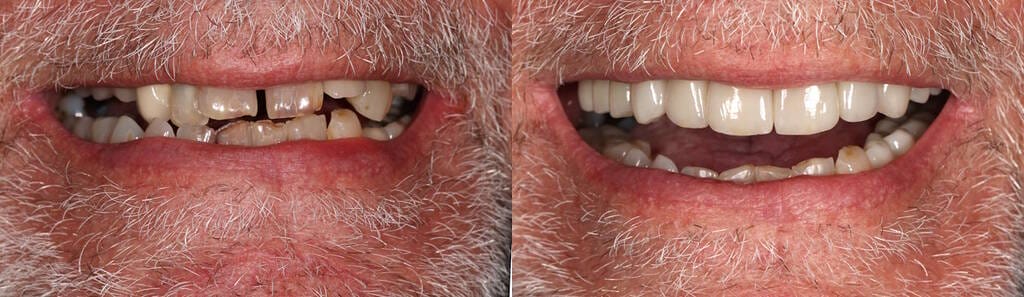
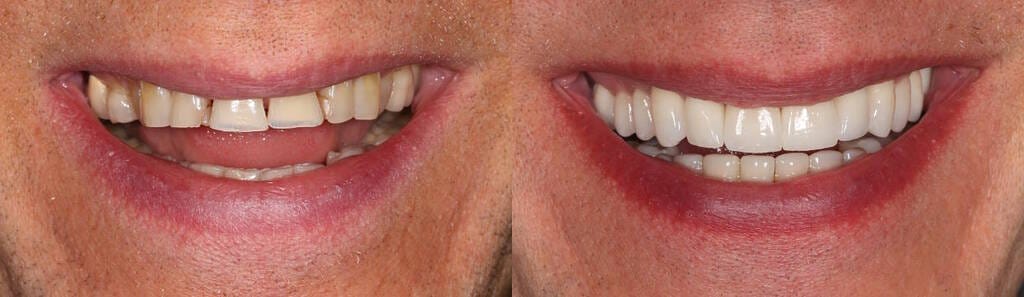
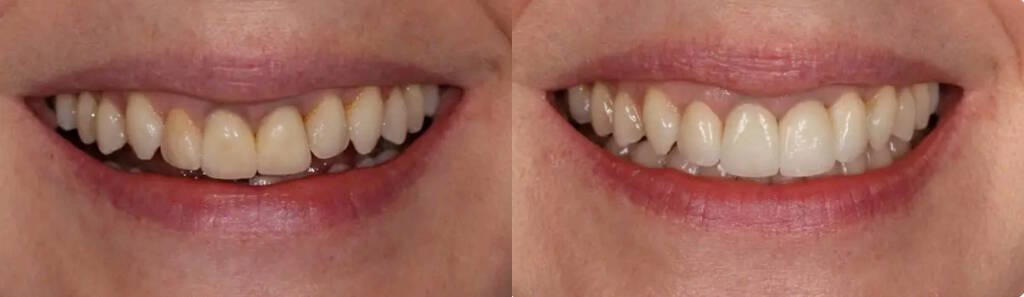
Real smile transformations with crowns and bridges
Take a look at our real-life dental crown and bridge cases. From restoring front teeth to full-mouth rehabilitation, our crowns and bridges help patients regain oral function and confidence. Our case studies demonstrate the power of high-quality dental restoration, carried out by some of London’s leading cosmetic dentists.
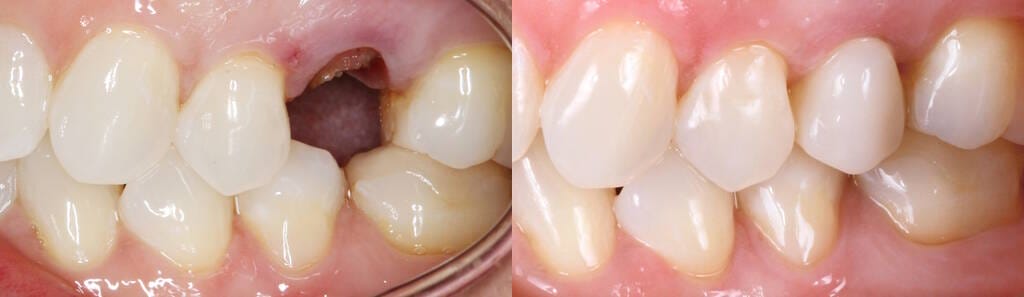
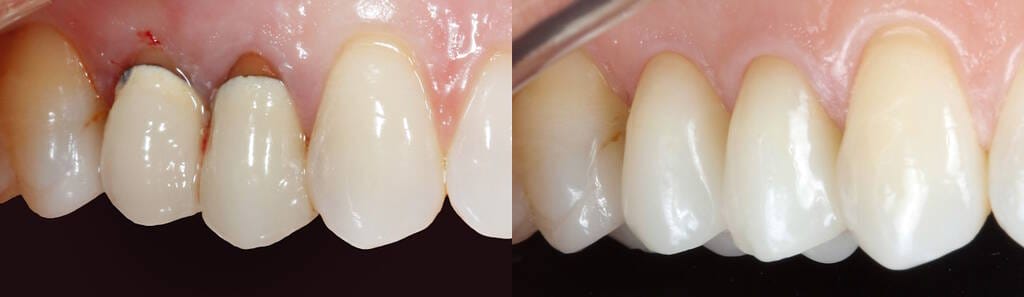

What is a dental crown?
A dental crown, or dental cap, is a restoration that completely covers a damaged or weakened tooth. It can restore the tooth’s shape, strength and appearance. Crowns are custom-made to match the natural tooth structure and can be made from a range of materials including porcelain, zirconia, gold, or resin.
Crowns are often used after a root canal, large fillings or to restore a cracked or broken tooth. In some cases, crowns are placed for cosmetic reasons, especially on front teeth where colour or shape correction is needed.
Dental crown procedure – what to expect
The dental crown procedure is typically completed in two dental appointments:
Visit one – step one – The dentist will initially assess the tooth to ensure the correct strategy to only drill the tooth in the most minimal invasive way, typically using a local anaesthetic to numb the area before-hand. While the injections starts working the dentist takes an image or performs a colour match so that if the crown is visible, it seamlessly blends with the natural colour of the other teeth.
They’ll then proceed by removing any decayed tooth structure or old filling material to re-build the tooth with a core build up fillings, which remains underneath the new crown. The remaining surface of the tooth and the core filling will then be shaped to create space for the the crown cap.
Visit one – step two – The dentist will proceed to take an impression or a scan of the prepared tooth so a dental crown can be designed in a laboratory.
Visit one – step three – A temporary crown is fitted, which is usually fabricated from an acrylic material designed to bring function and aesthetic whilst the permanent crown is being manufactured.
Visit two – Attending the secondary appointment means the temporary crown will be removed from the tooth, the tooth cleaned and the permanent crown will be fitted.
We only use the highest quality dental materials, including durable dental porcelain, for a natural look and long-term success.
What types of crowns are there?
Crowns cover the entirety of the visible part of a tooth and can be made out of different materials:
- Temporary crowns: Used after the preparation of the tooth whilst we wait for the lab to fabricate the final crown. Usually made of acrylic or composite.
- Metal-ceramic crowns or porcelain-fused-to-metal crowns: These have a metal framework which is then veneered with porcelain. This was the gold standard in dentistry for many years.
- Gold crowns: Apart from their out-of-style appearance, gold is a very good material for crowns. We still use them on the very back teeth, where they don’t stand out, for patients who have a very strong bite or grind and prioritise longevity.
- Porcelain crowns: The term is synonymously used with all-ceramic crowns, meaning that the crown material does not contain metal.
- Lithiumdisilicate (e.max crowns): Together with Zirconia, this material sets the benchmark for all-ceramic crowns. A lithium disilicate is a sturdy ceramic material renowned for its aesthetics and resemblance to natural teeth. It is a favoured option for producing lifelike crowns and other dental prosthetics.
- Zirconia crowns: Our preferred type of crowns. They are metal-free, very strong, yet also beautiful. Zirconia is also the most biocompatible material we can use, which makes gums happy. We have had many improvements in the last decade on zirconia crowns, and they keep getting better and better.
- Implant crowns: Implant crowns are placed on the titanium screw which sits in the bone
- Ceramic crowns: See porcelain crowns. Ceramics can also be used for dental bridges
- Telescopic crowns: All-ceramic, non-noble alloy or gold crowns underneath a removable “telescopic” denture
If you’re looking for dental crowns in London that provide the most aesthetically pleasing result, we recommend all-ceramic crowns. This type mimics the tooth most accurately, coming as close to your natural tooth as possible in terms of looks, whilst at the same time providing durability and biocompatibility.
Who needs dental crowns?
Crowns are a common solution for several dental issues. You might benefit from a crown if you:
- Have a heavily filled or fractured tooth
- Completed root canal treatment
- Have extensive wear or enamel erosion
- Need support for a dental bridge or dental implant
- Have a tooth with deep cracks or a broken surface
- Want to improve the appearance of a discoloured or misshapen tooth
- Have a failing filling or insufficient natural tooth structure to support further restoration
If you’re unsure, we’ll discuss your options and whether a crown, veneer or composite bonding is more appropriate.
What are the benefits of dental crowns?
- Protects a weak tooth from further damage
- Restores full function to the entire tooth
- Improves appearance for cosmetic reasons
- Can support a dental bridge or be placed on dental implants
- Long-lasting results (15–20+ years with proper care)
- Customised to blend in perfectly with your natural teeth
For the best results, we recommend good oral hygiene and regular check-ups to ensure the longevity of your crown.
Meet your award-winning Dental Crowns dentist and team…
Our specialist team brings together more than 75 years of combined experience in dentistry, with over 10,000 treatments successfully carried out to date. Recognised as leaders in the field, we not only deliver exceptional patient care but also contribute to the advancement of dentistry by teaching, lecturing, and publishing our research on an international stage.



What happens during dental crown preparation?
After careful evaluation and deciding together with the patient that a crown is the best restorative choice for your tooth, your dentist will proceed with the preparation of the tooth for a crown. It will all be absolutely pain-free, of course.
He then either takes a digital scan of the tooth or sometimes an impression with silicone. The tooth is immediately restored with an excellent temporary crown, which will feel and look like the final one, except that it is made of acrylic. Our master dental technicians will then produce the crown with exceptional attention to detail, ensuring that it not only looks great but also has a high-precision fit. Our dental laboratory in London, Venice or Munich will deliver the perfect match in both functionality and aesthetics.
When the crown is ready, we clean the affected tooth, fitting the crown to it seamlessly with adhesive dental cement.
Post-treatment, we recommend our patients schedule routine appointments with us to include an assessment of the stability of their dental crowns now fitted.












Looking for the best Dental Crowns in London?
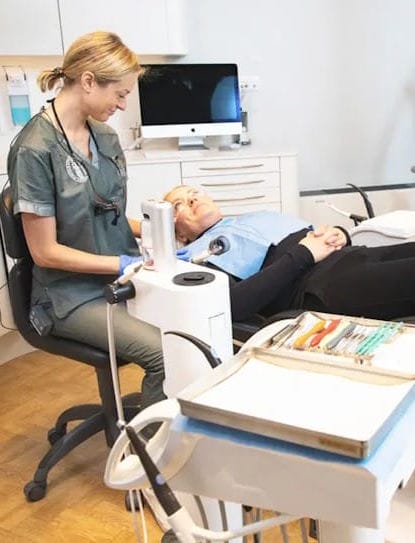
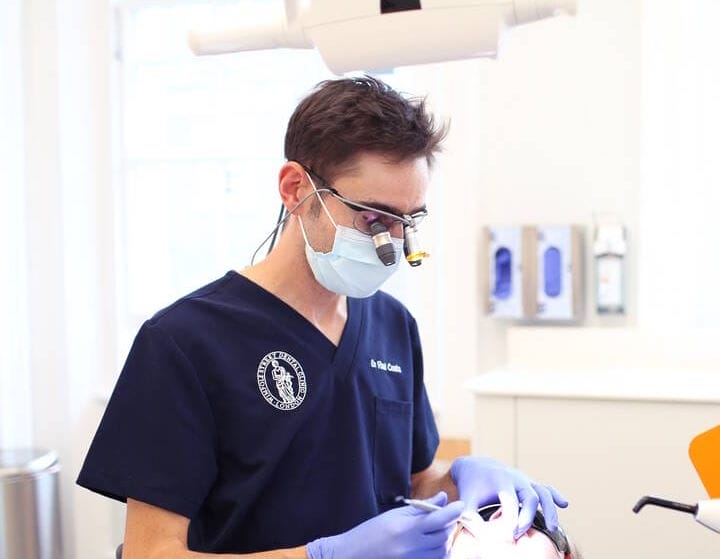
Protecting and restoring your smile doesn’t just have dental health benefits but it can also restore self-confidence and help patients feel less self-conscious about their appearance. Wimpole Street Dental Clinic is the perfect choice for patients considering a dental crown for a number of reasons:
Our team have decades of combined experience, craft and expertise in restorative and cosmetic dentistry . We are regularly invited to share our knowledge with our colleagues and students on the lecture circuit worldwide. Specifically for dental crowns, we design the full ceramic crowns we use ourselves in our own dental laboratory , giving us complete control over both the product and the service we can offer. You can rest assured that we know every component in the dental crown and that your crown has been custom-made to the highest standard by our team.
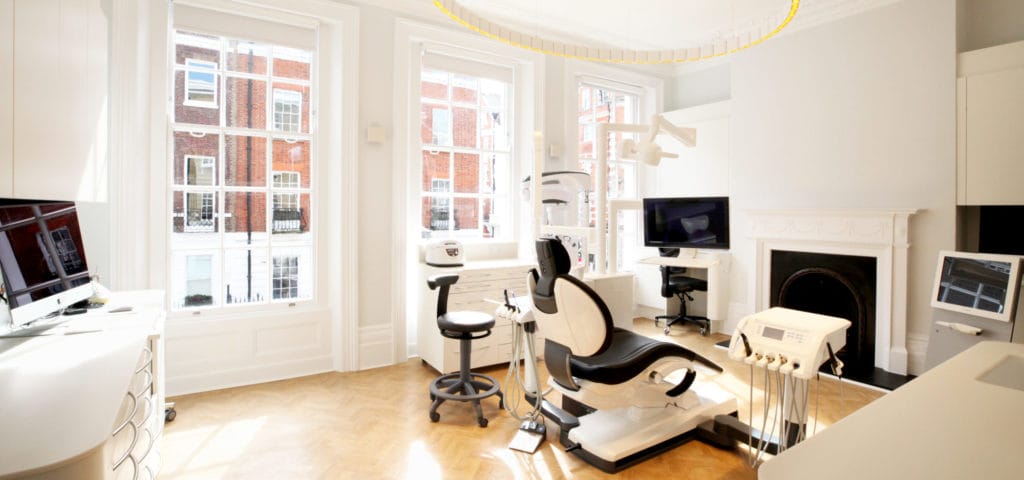
Our recently refurbished clinic is conveniently located in the heart of central London, off the prestigious Wimpole Street.
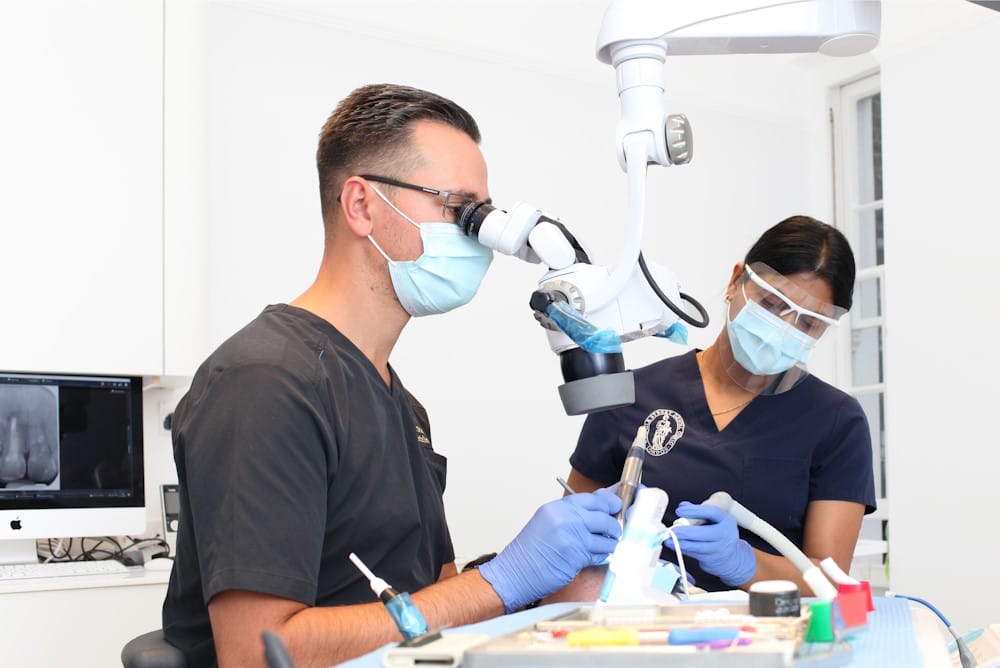
We utilise the very latest state-of-the-art technology to help visualise and plan our dental treatments. Using the most effective and innovative dental techniques, we’re able to provide our patients with reliable, aesthetically pleasing results consistently.
Frequently asked questions about crowns
Fillings vs crowns – what’s the difference?
Fillings are used to repair smaller areas of decay, whereas crowns are ideal when more extensive damage is present. If a filling is too large or the tooth is structurally compromised, a crown offers greater protection and strength for the whole tooth.
Our cosmetic dentists will always choose the least invasive, most effective option for restoring your smile.
Crowns, bridges and veneers – which is right for you?
Sometimes, crowns are used in combination with bridges to replace missing teeth. If a dental implant is not suitable, a dental bridge supported by crowns can be an excellent alternative.
For purely cosmetic improvements, dental veneers may be suggested instead of full crowns, especially on front teeth. Composite bonding is another option for smaller repairs.
Our dentists will explain all treatment options and help you choose based on your goals, oral health, and long-term success.
How long do dental crowns last?
With good care, most crowns last 15–20 years or longer. Factors affecting longevity include grinding, biting forces, oral hygiene, and whether the crown is placed on a natural tooth or implant.
We recommend a night guard if you grind your teeth and regular visits for hygiene and monitoring.
Are crowns toxic or harmful?
Not at all. We use only biocompatible materials like zirconia and porcelain. These are safe, metal-free, and well tolerated by the gums and surrounding tissue.
Can a cracked or loose crown be fixed?
Most cracked or damaged crowns will need replacing. Temporary repairs are possible in emergencies, especially for porcelain crowns, but are not long-term solutions.
Do crowns prevent gum disease?
Crowns don’t prevent gum disease directly, but they do help by restoring proper tooth shape and allowing easier cleaning. Maintaining great oral hygiene is still essential.
What if I don’t get a crown when I need one?
Avoiding treatment can lead to further damage or even tooth loss. A weak or broken tooth may eventually become unrestorable, making dental implants or extractions the only solution.
How much do dental crowns cost in London?
- New patient consultation: £240
- Crown (porcelain/zirconia): From £1,600
- Crown post and core: From £400
- Implant crown: From £1,800
- Onlay / Partial crown: From £1,600
We’ll confirm your crown cost after your consultation and provide flexible payment options to make high-quality dental care more accessible.
Content updated
Written by: Dr Raul Costa
Medically reviewed by: Prof Dr Christian Mehl
Hero banner updated
Written by: Prof Dr Christian Mehl
Medically reviewed by: Dr Raul Costa
New page design
Written by: Prof Dr Christian Mehl
Medically reviewed by: Dr Raul Costa
Original content created
Written by: Prof Dr Christian Mehl
Medically reviewed by: Dr Raul Costa
Wimpole St Dental Clinic has strict sourcing guidelines and relies on peer-reviewed studies, academic research institutions, and medical associations. We avoid using tertiary references. You can learn more about how we ensure our content is accurate and current by reading our editorial policy.