Why gum correction matters
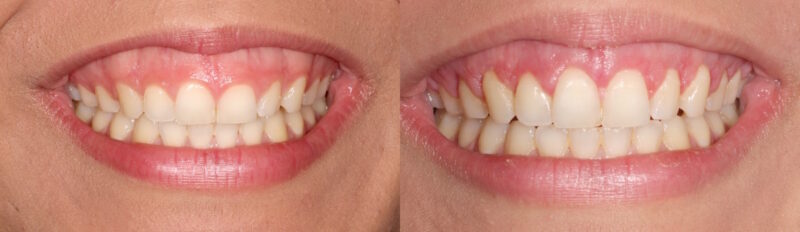
A smile is not just teeth. The gums frame them, and if the frame is wrong the picture never looks right no matter how good the teeth are. Patients often arrive convinced their teeth are too short or unevenly sized, when the teeth are perfectly normal and it is the gum line sitting too low or at inconsistent heights.
That distinction matters commercially as well as clinically, because the alternative most people are offered is veneers. Reshaping the gum line achieves the same visual result by removing nothing from healthy teeth. Where the gum is the problem, treating the teeth is both more invasive and less effective.
What is gum correction?
Gum correction, gum contouring and gum line correction all describe reshaping the soft tissue around the teeth to improve proportion, symmetry and health. It can mean removing excess tissue where the gum covers too much of the tooth, adding tissue where recession has exposed too much, or evening out a line that sits at different heights across the smile.
It is not purely cosmetic. Recession exposes root surfaces, which are softer than enamel, more prone to decay and often sensitive. Excess tissue creates spaces that are hard to clean and invite inflammation. Correcting the gum line frequently improves both appearance and long-term health at once.
Who is it suitable for?
Patients with a gummy smile, where too much gum shows when smiling. Patients whose gum line is uneven, so teeth appear different lengths. Patients with recession, where roots are exposed and teeth look increasingly long. Patients with excessive gum growth, sometimes caused by medication. And patients with discoloured gum tissue.
What matters first is gum health. Contouring inflamed or infected gums is pointless and will not hold, so if there is active gum disease we treat that first and reassess. That is not a delaying tactic, it is the difference between a result that lasts and one that relapses.
Treatment options
Gum line correction and contouring
Reshaping the gum margin so it sits at the right height and follows a consistent line across the smile. Small changes here produce disproportionate improvements in how the teeth look.
Gummy smile treatment
Where too much gum shows when you smile. The right treatment depends entirely on the cause, which may be the gum position, the way the lip moves, the bone level, or the teeth themselves not having fully erupted. Diagnosing that correctly is what separates a good result from a disappointing one.
Laser gum contouring
Where suitable, a laser allows precise reshaping with minimal bleeding and a comfortable recovery.
Gum grafting
Where recession has exposed root surfaces, tissue is grafted to cover them, protecting the root and restoring the proportion of the tooth.
Excessive gum growth correction
Overgrown tissue, sometimes a side effect of medication, is reduced so the teeth are visible and the area can be cleaned properly.
Discoloured gum treatment
Addressing pigmentation or discolouration in the gum tissue itself.
The process
We start by assessing your gum health, the bone level beneath, your lip position and your teeth together, because a gummy smile caused by lip movement needs a different answer to one caused by gum position, and treating the wrong cause achieves nothing. The plan is discussed and agreed before anything begins.
Treatment itself typically takes around 90 minutes under local anaesthetic. Recovery is usually around five days, with some tenderness in the first few. You will have clear aftercare instructions and a review appointment to check healing.
Our approach
Gum correction sits at the point where periodontal health and cosmetic dentistry meet, which is exactly why it is so often done badly. Treated as a purely cosmetic trim it relapses; treated as a health problem alone it never looks right. Prof Dr Christian Mehl, a registered specialist in prosthodontics, plans these cases with the final appearance in mind and the underlying health treated first. Where a case calls for a registered periodontist, we refer.