Why professional whitening matters
Whitening is the most requested cosmetic treatment in dentistry and the one most often done badly. The difference between a professional treatment and a high street kit is not just strength, it is assessment. Before anything is applied we check that your teeth and gums are healthy, identify what is actually causing the discolouration, and establish whether whitening will work on it at all. Some staining lifts beautifully. Some does not respond to bleach and needs a different answer entirely.
In the UK, tooth whitening is a dental procedure and must be carried out by a registered dental professional. Beauty salons and kiosks offering it are working outside the law, and the products sold direct to consumers are limited to concentrations too low to do much. That is why results from them are so often disappointing, or uneven.
What causes discolouration
Extrinsic staining sits on the surface and comes from tea, coffee, red wine, tobacco and highly coloured foods. It responds well to whitening and often to hygiene treatment alone. Intrinsic discolouration sits within the tooth, caused by ageing as enamel thins and the darker dentine below shows through, by trauma, or by certain medications such as tetracycline taken during tooth development. Intrinsic discolouration is more stubborn, and where a single tooth has darkened after root canal treatment, internal bleaching is usually the right approach rather than whitening the whole arch.
Types of whitening available
In-office whitening
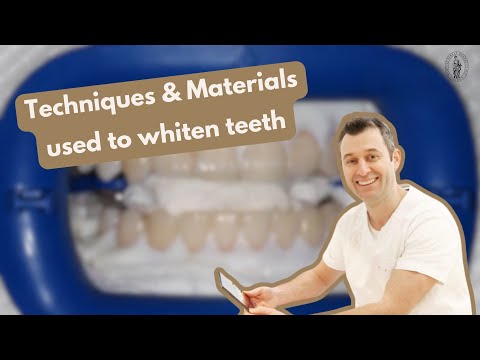
Carried out here in a single appointment of around an hour. A stronger gel is applied under controlled conditions with your gums protected. It suits patients who want a result quickly or who would rather not manage trays at home.
Home whitening
Custom trays are made from impressions of your teeth, and you wear them with a professional-strength gel over roughly two weeks. Because the trays fit precisely, the gel goes where it should and nowhere else. Many patients find this gives the most even result, and you keep the trays for future top-ups.
In-office with a home kit
The combination. You get the immediate lift from the in-office treatment, then consolidate and fine-tune it at home. This is the option for patients who want the maximum change and the means to maintain it.
Internal bleaching
Where a single tooth has darkened from the inside, usually after root canal treatment, bleaching agent is placed within the tooth itself. Whitening the outside of that tooth will not fix it.
What to expect during treatment
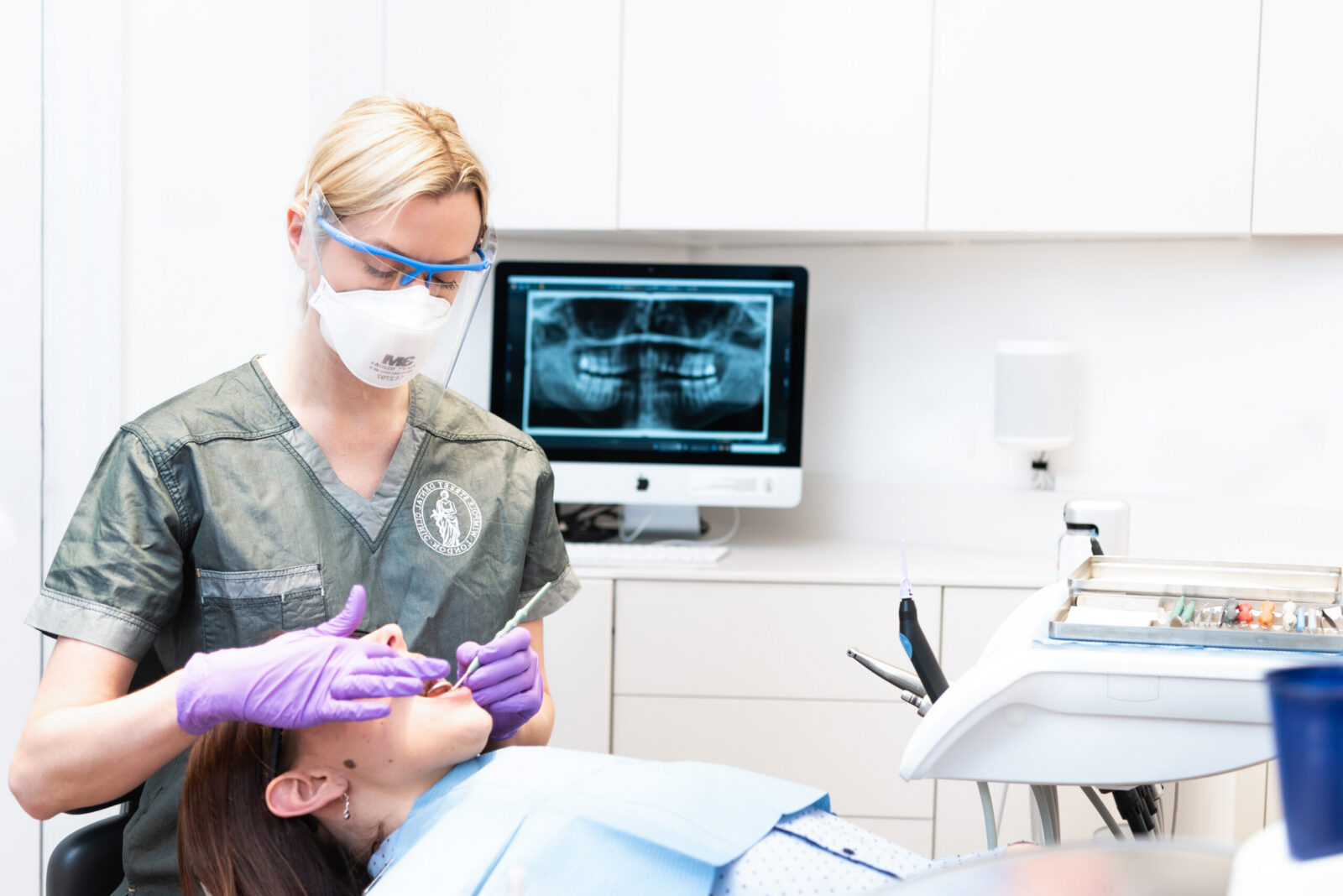
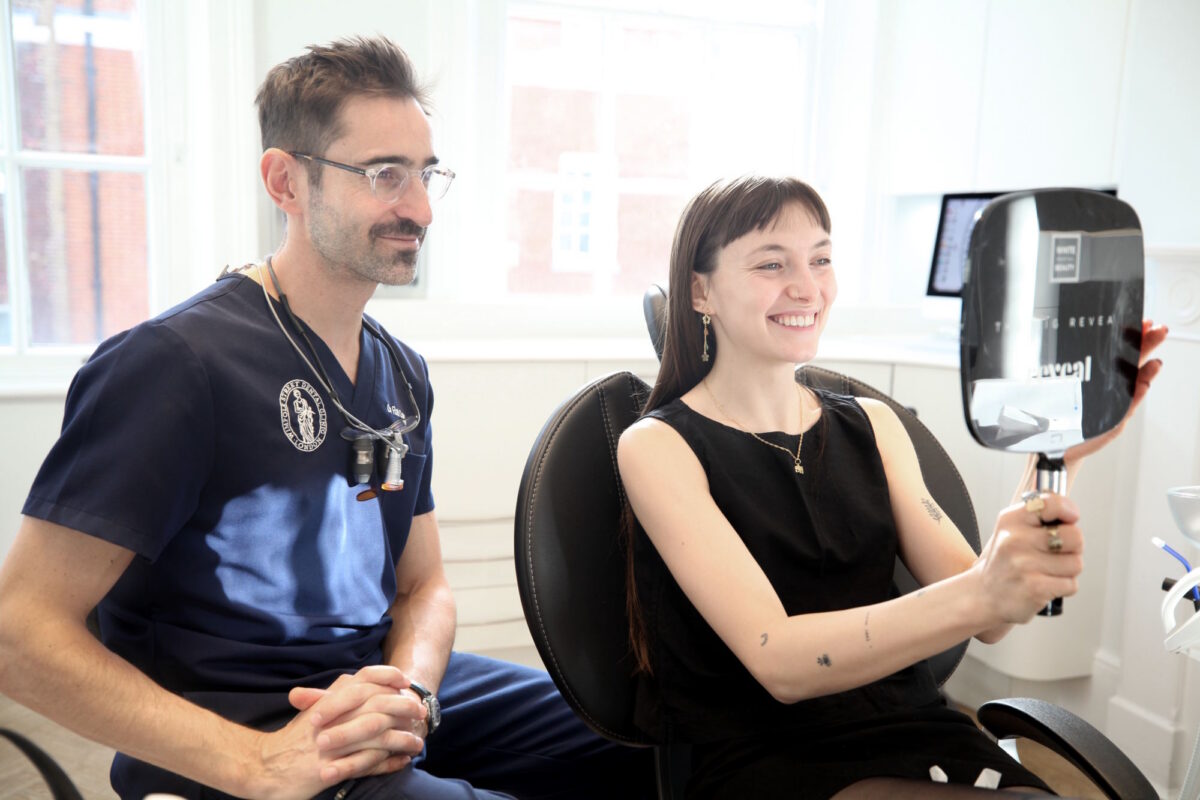
We start by recording your current shade properly, so the change is measured rather than remembered. Your teeth are cleaned first, since whitening gel works on the tooth surface and not through plaque. For in-office treatment your gums are isolated and protected, the gel is applied in cycles across roughly an hour, and you see the result the same day. For home whitening, impressions are taken, trays are made to fit, and we show you exactly how much gel to use and for how long. We review you afterwards either way.
How long results last
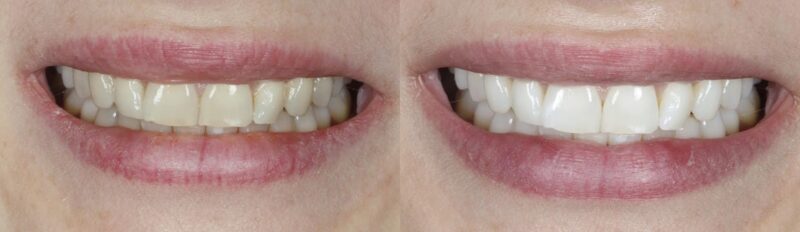
Typically somewhere between one and three years, though it varies considerably with your habits. Tea, coffee, red wine and tobacco will pull the shade back down fastest. Keeping your trays means you can top up periodically rather than starting again, which is why the combined option works out well for many people. Whitening does not damage enamel when done properly, so maintaining it is straightforward.
Advantages and considerations
The advantages are real: it is the least invasive cosmetic treatment available, nothing is removed from the tooth, there is no recovery time, and the change can be significant. The considerations matter too. Sensitivity during treatment is common and usually temporary. Whitening does not change the colour of crowns, veneers, bridges or fillings, so existing restorations in your smile line may need replacing afterwards to match, which is a cost worth knowing about upfront. And results depend on what is causing the discolouration in the first place.
Who is suitable for whitening?
Most adults with good oral health. What we check first is that there is no active decay or gum disease, since whitening an unhealthy mouth is both uncomfortable and pointless. It is not suitable during pregnancy or breastfeeding, and it is not carried out on under-18s except in specific clinical circumstances. If your discolouration will not respond to bleach, we will tell you and talk through the alternatives rather than sell you a treatment that will not work.