


Wisdom Tooth Removal London

Treatment
1+ hour

Price
From £400

Team Experience
50+ years

Recovery Time
24 hours

Google Rating
★★★★★ (4.9)

Wisdom tooth removal is a specialised form of oral surgery that addresses issues arising with the last set of permanent teeth, known as wisdom teeth. These teeth typically emerge in the late teenage years or early twenties, and their removal is often necessitated due to limited space in the mouth. When wisdom teeth can’t emerge properly, they become impacted, leading to pain, infection, and potential damage to adjacent teeth and overall oral health.
Impacted wisdom teeth can significantly affect your oral health, causing problems like extensive decay, contributing to gum disease, and even altering the alignment of your other teeth. This is why their timely removal is crucial.
Meet your award-winning Wisdom Tooth Removal dentist and team…
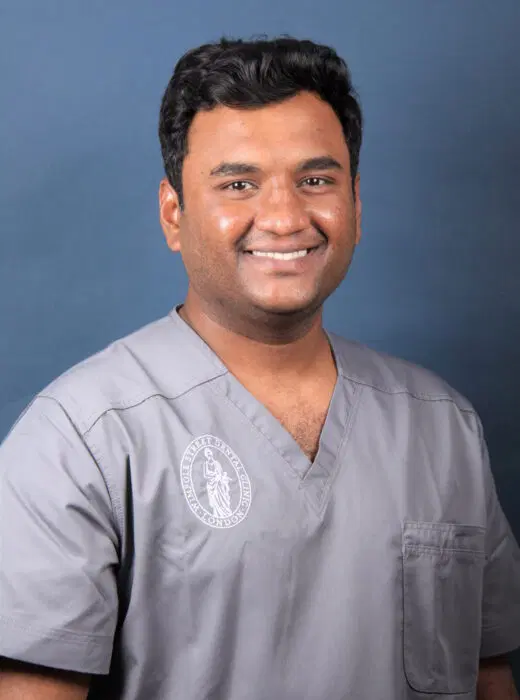
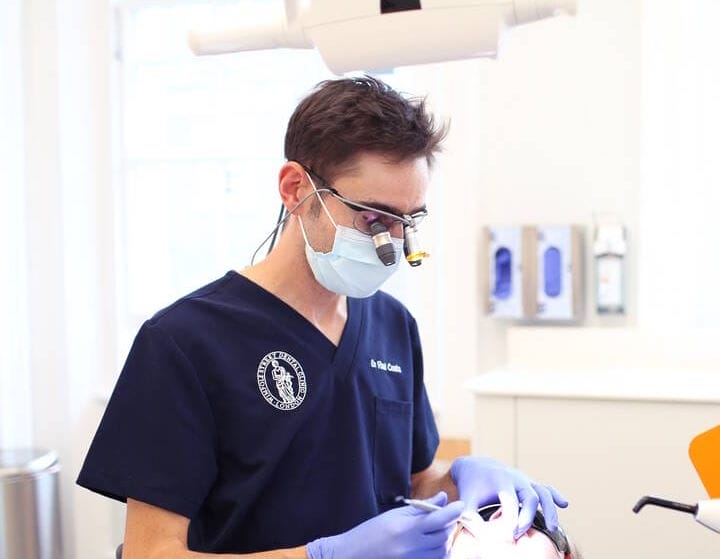
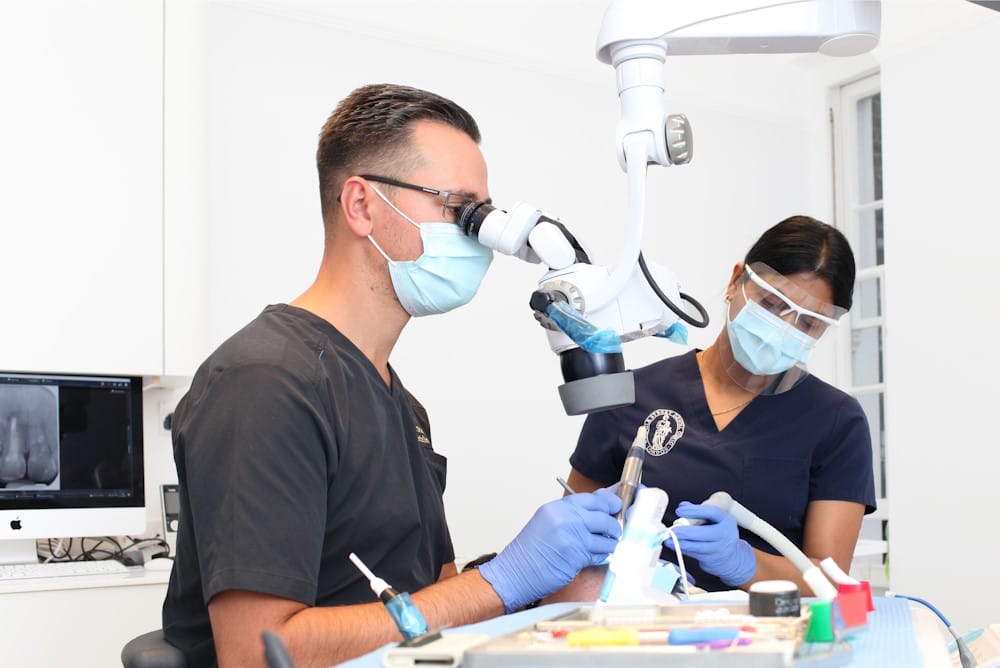
Meet your award-winning dentist and team, bringing together more than 75 years of combined experience in restorative and cosmetic dentistry. With over 10,000 procedures completed, including crowns, veneers, inlays and implants, they offer an exceptional depth of skill and precision. As recognised experts in prosthodontics, the dental speciality dedicated to restoring and replacing teeth, they deliver high-quality, long-lasting results. Their leadership in the field extends beyond the clinic too, with the team regularly teaching, lecturing and publishing internationally.


What happens during oral surgery?
Your dentist will take an X-ray using our state-of-the-art 3D X-ray technology to determine the best dental care plan for you to agree on together.
Ideally, before any surgical procedure, you should see the dental hygienist, as this reduces the risk of infection after the oral procedure.
Rest assured that you will receive a local anaesthetic to numb the affected tooth and surrounding gums before the treatment begins.
The area may be accessed with small incisions which assist in the effective removal of the affected tooth or tissue.
With a wisdom tooth especially, you may feel a sensation of pressure as your dentist proceeds to remove the affected tooth from its socket by widening it slightly for ease of extraction.
Post-surgery, trust your dentist to seal the affected area with dissolving or non-resorbable stitches as required, explain your aftercare plan and schedule your next check-up.



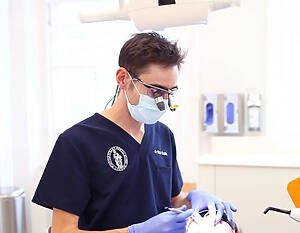


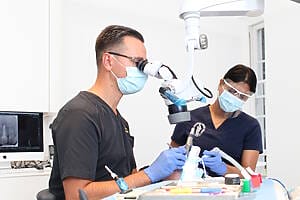



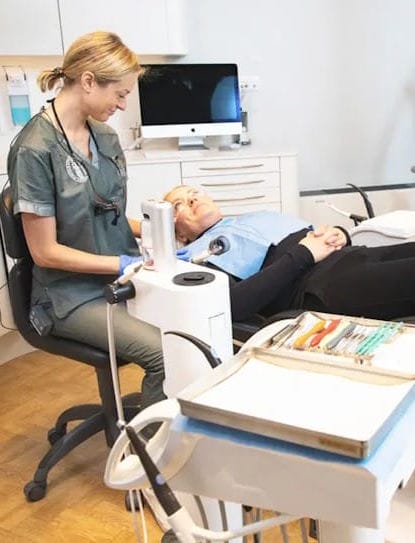



Looking for the best Wisdom Tooth Removal in London?
If you find you need a procedure, you will undoubtedly be looking for a specialist within this field of general dentistry whom you can trust to deliver the latest best practice, clinical outcome success, the highest quality standards and a patient-first treatment approach.
Come to Wimpole Street Dental Clinic in London to be relaxed and reassured by our dentists offering a multi-disciplinary and holistic approach to their work. Our clinical expertise includes the full range of dentoalveolar surgery like the extraction of impacted wisdom teeth present in complex cases.
Implant therapy, along with bone augmentation, such as sinus lifts and soft tissue rehabilitation form a vital part of our specialist practice.
We have decades of combined experience in both cosmetic dentistry and general dentistry.
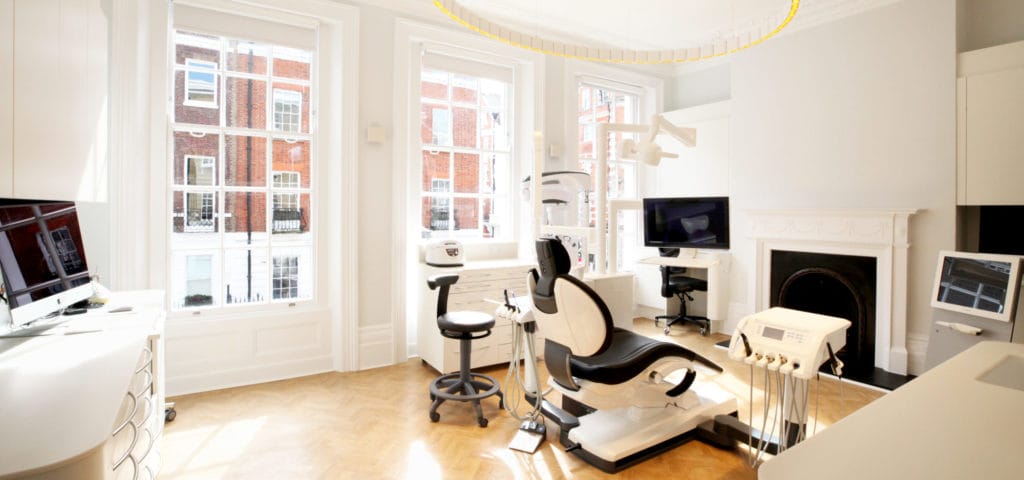
Our state-of-the-art dental practice is conveniently located near the prestigious Wimpole Street in the heart of London (accessible by underground, taxi, bus and car). It features some of the most innovative and latest technology available in dentistry today.
Frequently asked questions
Is Wisdom Tooth Removal painful?
Wisdom tooth removal is generally not painful during the procedure, thanks to local or general anaesthesia. You may experience discomfort or mild pain after the anaesthesia wears off, but this is typically manageable with prescribed pain medication or over-the-counter pain relievers. Some swelling and tenderness in the area is normal and should subside within a few days.
How long is the recovery period after Wisdom Tooth Removal?
Recovery time varies, but most people can return to normal activities within a few days. Complete healing of the gums may take several weeks. It’s important to follow post-operative care instructions, like avoiding strenuous activity and eating soft foods, to ensure a smooth recovery. Swelling and discomfort should decrease significantly within the first few days after surgery.
What are the risks associated with Wisdom Tooth Removal?
As with any surgery, there are risks, though complications are rare. These include infection, dry socket (where the blood clot at the surgical site is dislodged), damage to surrounding teeth, and temporary or rarely permanent nerve damage. Your dentist or oral surgeon will discuss these risks with you and take steps to minimize them.
Can I eat normally after Wisdom Tooth Removal?
Immediately after surgery, stick to soft foods and liquids to avoid irritating the surgical site. Foods like yogurt, soup, and applesauce are good choices. Gradually reintroduce solid foods as you feel comfortable in the days following the procedure. Avoid hard, crunchy, or very hot foods that can disrupt the healing process.
How do you brush your teeth after oral surgery?
We would recommend that your oral hygiene regime is conducted with the utmost care, particularly close to the affected area within the mouth. Always ask your dentist about the best brushing technique following oral surgery. We also encourage you to avoid rinsing your mouth with dental hygiene liquids, such as mouthwash for the first 12 hours post-surgery.
How long should swelling last after oral surgery?
You may experience swelling, and sensitivity of discomfort for a few days post-surgery. Whether you had wisdom teeth removed, dental implants placed, bone augmentation or just an apicectomy, the swelling will continue to expand for around two days, then peak around the second or third day and will then slowly subside. Should you have any concerns regarding your recovery, please contact us.
How long does oral surgery take?
The duration of oral surgery can vary in each individual case depending on the complexity of the medical issue as presented on this occasion. We have decades of combined experience and expertise in the field of dentistry.
Can a dentist perform oral surgery?
It is possible for your dentist to perform oral surgery such as a routine tooth extraction. If your individual case presents significant complexity, we recommend referral to our oral surgeon or to a specialist in that area of dentistry.
Can I drink water before oral surgery? What are good soft foods for after oral surgery? How long after oral surgery can I eat?
Oral surgery is a clinical procedure that always requires local anaesthesia and sometimes sedation. If the procedure is done under local injection you can eat and drink as much as you want before the procedure. We would recommend that you do not eat or drink prior to your surgery with us if it is in sedation. Post-surgery, we would suggest soft foods and soup. As a tip, you can eat anything which you can mash with your fork. Consider refraining from eating foods that require extensive chewing or are presented at extremely high or cold temperatures to offer your mouth time to heal. The NHS confirm the recovery process can take up to two weeks so please be patient. We would suggest to a patient that you can eat when you feel ready afterwards but all soft or liquid foods to be consumed with the utmost care.
How long after oral surgery can you drink alcohol?
Always consult your dentist or oral surgeon for the best advice on when you can drink alcohol again after your oral surgery. Please remember that for the first few days post-surgery you may experience discomfort so our best advice during this initial recovery period is to rest and relax. Consumption of alcohol following surgery is likely to harm the rate of recovery and could do further damage to the affected area.
How long does anaesthesia last after oral surgery?
Pain relief medication options used during oral surgery are local anaesthesia, sedation and general anaesthesia depending on each dental patient’s needs and preferences as discussed during consultation. Anaesthesia does not generally last long post-surgery and how long it takes can vary according to the individual and the type of medication used. For full details on your pain relief choices, contact us at the dental practice to speak to one of our sedationists.
How do you prepare for oral surgery?
Please read and understand both the pre-and post-operative instructions we have given to you. Ask your dentist and/or oral surgeon all your questions so that you arrive for your appointment with us relaxed, reassured and ready. Eat only a light meal if you need to but it is preferable to refrain from both food and drink prior to your appointment. Consider your personal comfort during the operation by wearing clothes you can relax in. Sleep well the night before with the certain knowledge you have all the information you need from the dentist and oral surgeon you trust at Wimpole Street Dental Clinic in London.
How long do stitches stay in after oral surgery?
It is very common for stitches to stay between five and 14 days. Your oral surgeon will generally select stitches which suit the surgery best. Non-resorbable stitches have to be removed while resorbable stitches dissolve a few weeks post-treatment.
Content updated
Written by: Prof Dr Christian Mehl
Medically reviewed by: Dr Raul Costa
Hero banner updated
Written by: Prof Dr Christian Mehl
Medically reviewed by: Dr Raul Costa
New page design
Written by: Prof Dr Christian Mehl
Medically reviewed by: Dr Raul Costa
Original content created
Written by: Prof Dr Christian Mehl
Medically reviewed by: Dr Raul Costa
Wimpole St Dental Clinic has strict sourcing guidelines and relies on peer-reviewed studies, academic research institutions, and medical associations. We avoid using tertiary references. You can learn more about how we ensure our content is accurate and current by reading our editorial policy.
- van Pelt AW, de Kloet HJ, van der Kuy P. Keramische inlays en onlays [Ceramic inlays and onlays]. Ned Tijdschr Tandheelkd. 1996 Nov;103(11):472-6. Dutch. PMID: 11921995.
- Christensen GJ. Tooth-colored inlays and onlays. J Am Dent Assoc. 1988 Sep;117(4):12E-17E. doi: 10.14219/jada.archive.1988.0036. PMID: 3053856.
- Leirskar J, Henaug T, Thoresen NR, Nordbø H, von der Fehr FR. Clinical performance of indirect composite resin inlays/onlays in a dental school: observations up to 34 months. Acta Odontol Scand. 1999 Aug;57(4):216-20. doi: 10.1080/000163599428805. PMID: 10540932.
- Meyer A Jr, Cardoso LC, Araujo E, Baratieri LN. Ceramic inlays and onlays: clinical procedures for predictable results. J Esthet Restor Dent. 2003;15(6):338-51; discussion 352. doi: 10.1111/j.1708-8240.2003.tb00307.x. PMID: 14982661.