


Inlays, onlays & partial crowns in London

Treatment
90 minutes

Price
From £1,600

Team Experience
75+ years

Recovery Time
24 hours

Google Rating
★★★★★ (4.9)
Examples of Inlays
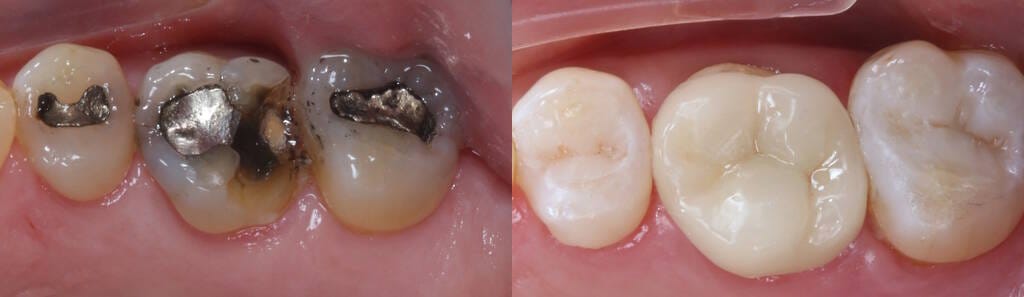
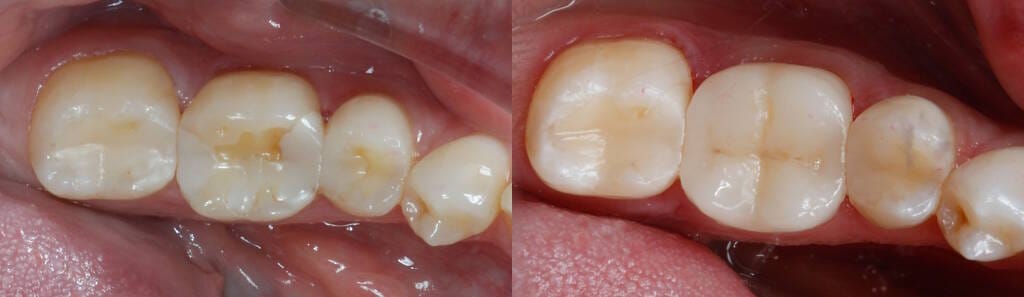
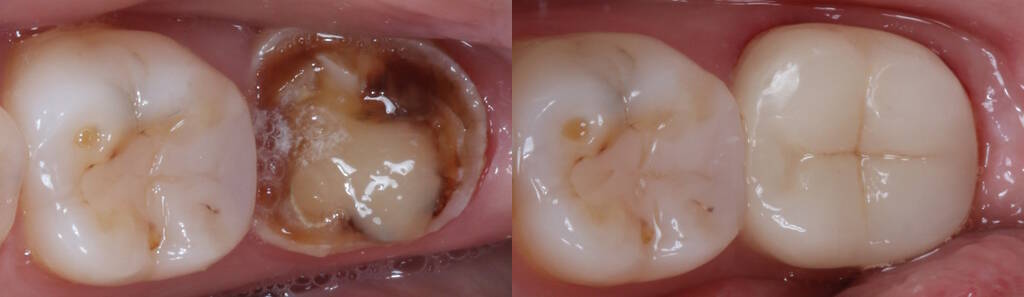
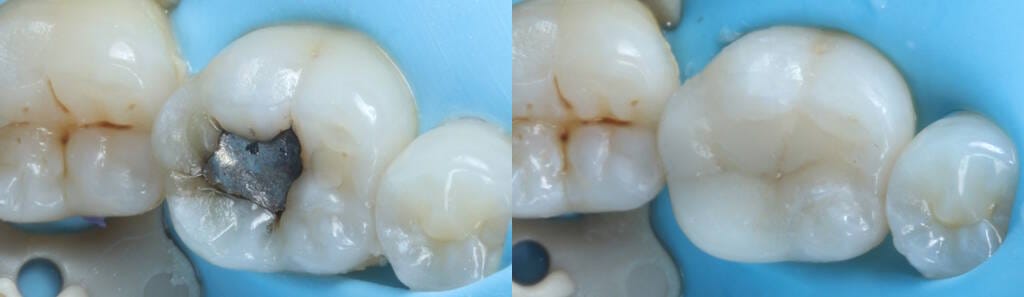
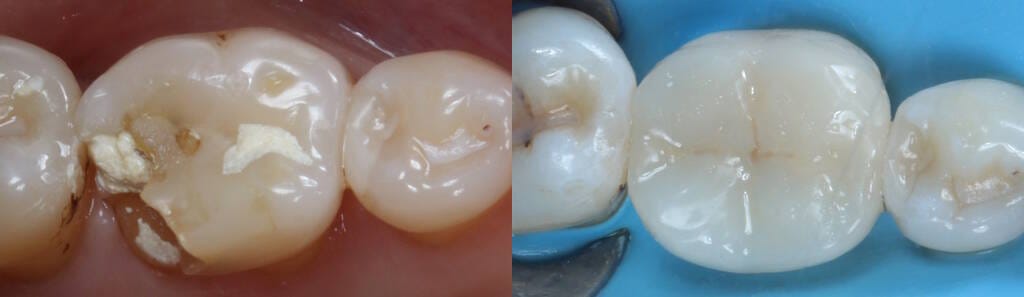
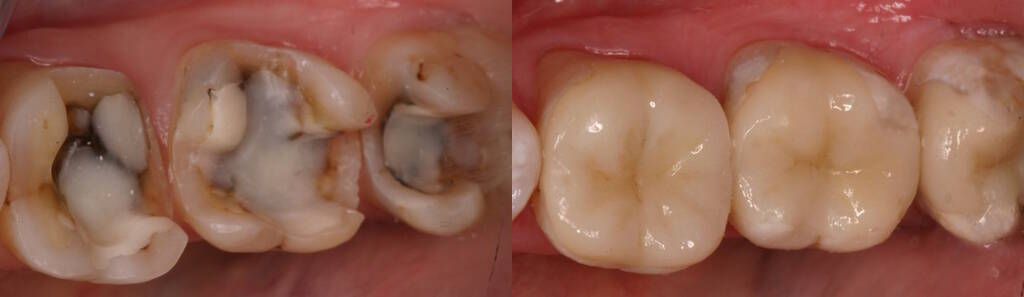

What are inlays, onlays, and partial crowns?
Inlays and onlays are precision-made restorations crafted in a dental laboratory to repair damaged teeth affected by decay, wear, or fractures. An inlay fits neatly within the chewing surface of a tooth, while an onlay or partial crown extends over one or more cusps, protecting a larger area.
These restorations are custom-made from porcelain or ceramic and bonded to the tooth, offering exceptional strength and natural appearance. Unlike a full crown, which covers the entire tooth, partial crowns preserve as much healthy enamel and dentine as possible — a cornerstone of tooth preservation and cosmetic dentistry.
The benefits of inlays and partial crowns
Choosing inlays or onlays offers a perfect balance between aesthetics, function, and conservation.
Key benefits include:
- Tooth preservation: Minimal tooth reduction compared to a full crown.
- Durability: Ceramic and porcelain crowns can last 15–20 years with proper care.
- Natural appearance: The ceramic material mimics the translucency of your natural teeth.
- Strength: Stronger than traditional fillings, ideal for molars and chewing surfaces.
- Comfort: Custom-designed to restore your bite precisely.
- Predictable results: Laboratory fabrication ensures accuracy and long-term stability.
Who is suitable for an inlay or partial crown?
You may be a candidate for an inlay, onlay, or partial crown if:
- You have moderate damage or decay that’s too extensive for a filling but doesn’t require a full crown.
- You want to replace large or old metal crowns or amalgam fillings with something natural-looking.
- You’ve undergone a root canal treatment and need to restore the tooth structure.
- You want a restoration that matches the shade and shape of your other teeth.
During your initial consultation, your dentist will discuss the key differences between the available dental procedures, outline the benefits, and recommend the most suitable option based on cost, extent of damage, and your preferences.
Common materials used for partial crowns
- Porcelain / Emax: Highly aesthetic, durable, ideal for visible teeth.
- Gold: Exceptional longevity and precision; less aesthetic but biocompatible.
- Metal-ceramic: Combines strength with a natural appearance.
- Composite resin: A cost-effective alternative for temporary restorations.
Each material has its own benefits, and our team will guide you through the best choice based on your clinical needs and preferences.
The key differences: Inlays vs onlays vs full crowns
| Type | Coverage | Preservation | Recommended for |
|---|---|---|---|
| Inlay | Within the tooth cusps | Maximum | Small to moderate cavities |
| Onlay / Partial crown | Covers one or more cusps | High | Large cavities or cracks |
| Full crown | Covers the entire tooth | Moderate | Severely damaged or root-canal-treated teeth |
Each type of restoration plays a role in tooth preservation, depending on the condition of the affected tooth. Our dentists will explain which option provides the best balance of protection and aesthetics.
Meet your award-winning Inlays & Partial Crowns dentist and team…
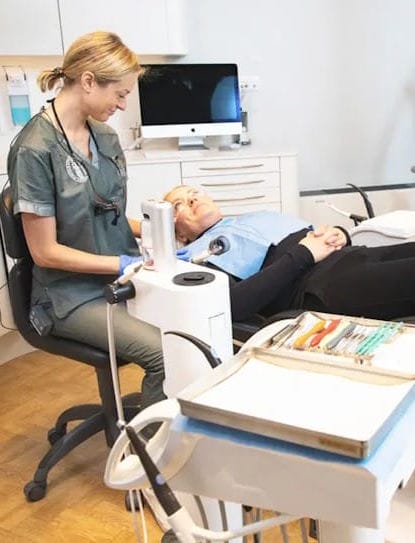
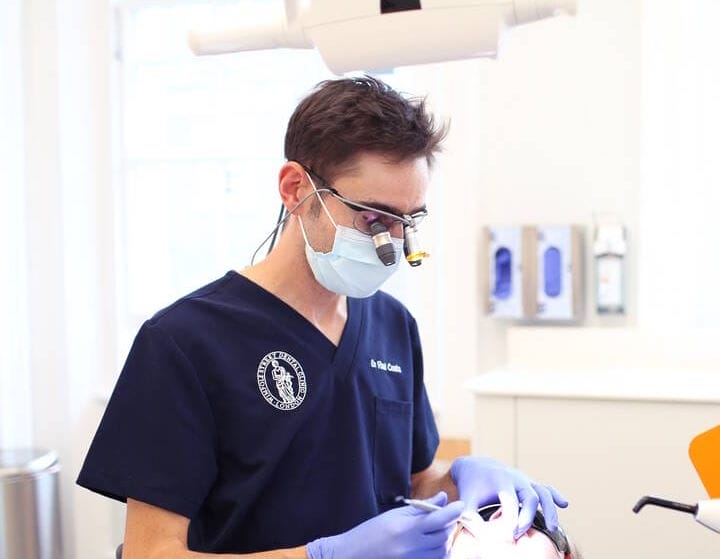
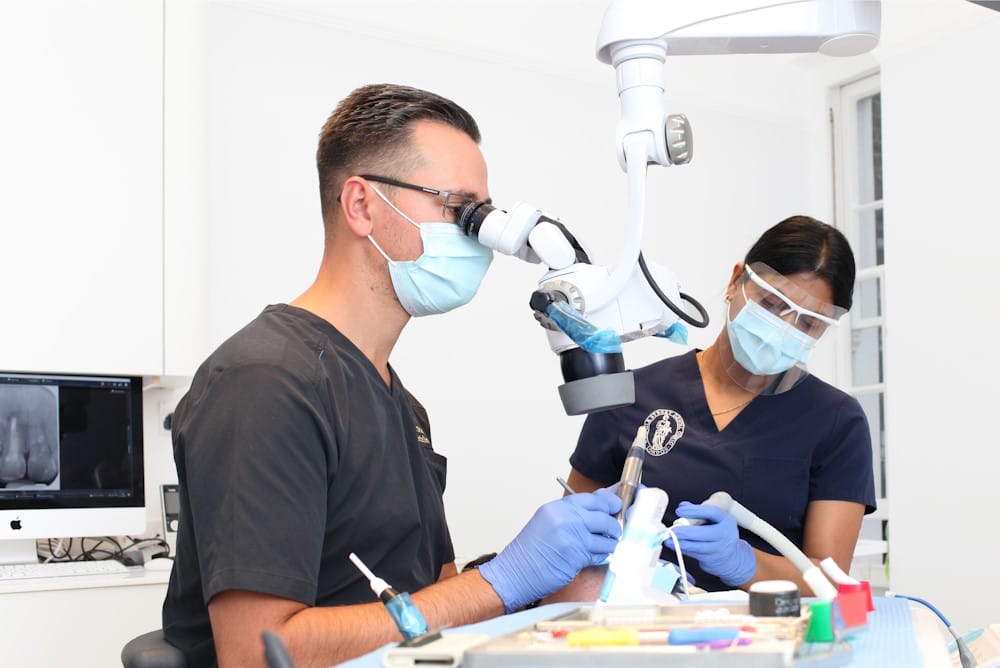
Meet your award-winning Inlays and Partial Crowns dentist and team, bringing together more than 75 years of combined experience in restorative and cosmetic dentistry. With over 10,000 procedures completed, including crowns, veneers, inlays and implants, they offer an exceptional depth of skill and precision. As recognised experts in prosthodontics, the dental speciality dedicated to restoring and replacing teeth, they deliver high-quality, long-lasting results. Their leadership in the field extends beyond the clinic too, with the team regularly teaching, lecturing and publishing internationally on dental crown procedures and advanced prosthetic rehabilitation.



What happens during inlay and partial crown treatment?
Step 1 – Consultation and diagnosis
Your dentist begins by examining the affected tooth and explaining why the damage has occurred. You’ll discuss all suitable dental procedures, including fillings, inlays, and full crowns, and receive transparent information about costs and benefits.
Step 2 – Tooth preparation
Under local anaesthetic, your dentist removes decayed or damaged tissue and shapes the cavity for restoration using minimally invasive principles to conserve as much natural tooth as possible.
Step 3 – Digital impression
A digital 3D scan is taken to capture the exact shape of your tooth crown and bite. A temporary crown or filling may be placed to protect the tooth while your final dental cap is crafted.
Step 4 – Laboratory fabrication
Your custom ceramic inlay or partial crown is designed digitally and created by our expert dental technicians using porcelain or composite materials that match your natural enamel.
Step 5 – Bonding and finishing
After one to two weeks, your final restoration is cemented in place using strong adhesive bonding agents. A dental dam isolates the tooth during the process, ensuring perfect bonding and protection.
Step 6 – Aftercare
You’ll receive detailed instructions for caring for your restoration, including hygiene tips to maintain gum health and prevent future decay.












Looking for the best Inlays & Partial Crowns in London?
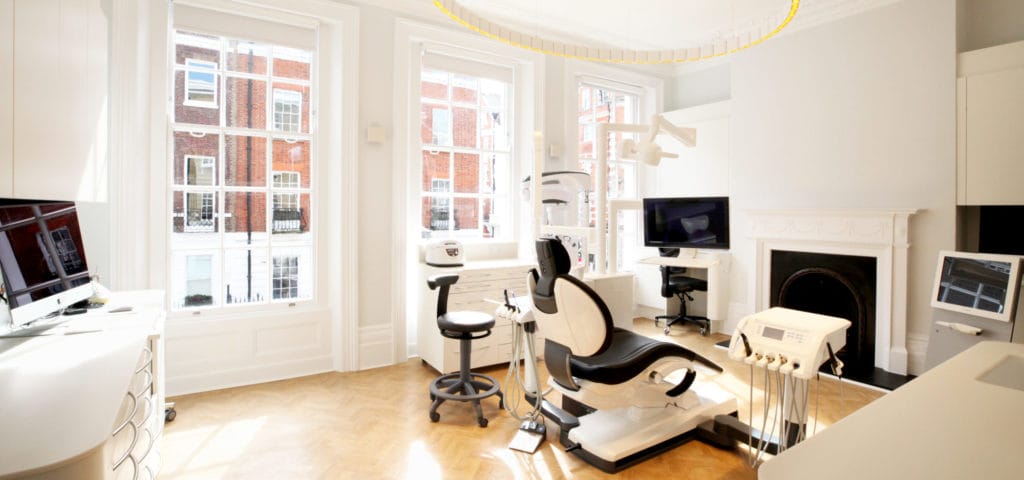
At Wimpole Street Dental Clinic, we combine artistry and science to create flawless, long-lasting results. Our advanced digital technology, including 3D scanners and CAD/CAM systems, ensures every restoration fits perfectly and blends naturally with your smile.
We work exclusively with premium materials such as porcelain, lithium disilicate (Emax) and other high-quality ceramics that offer exceptional strength and aesthetics. Each restoration is crafted with expert precision by our German master technicians in our partner laboratory, giving every patient the benefit of world-class workmanship.
With comprehensive care available under one roof, from simple fillings to full smile rehabilitation with dental implants, we provide a seamless and personalised treatment journey. Our patients benefit from precision dentistry designed for lasting success, comfort and confidence.
Frequently asked questions about Inlays & Partial Crowns
What does a dental inlay look like?
A dental inlay is virtually indistinguishable from your natural teeth. It’s custom-shaped to fit the prepared cavity and tinted to match your enamel. Once bonded, it restores both function and aesthetics — you’ll likely forget which tooth was treated.
Is having a partial crown procedure painful?
The dental crown procedure is performed under local anaesthesia, so you’ll feel no pain during treatment. Some patients experience mild sensitivity or tenderness for a few days, but this settles quickly. Most return to normal activities within 24 hours.
Do you need an impression for a dental inlay?
Yes. A precise digital impression is required to design the inlay or partial crown. Our advanced 3D scanning technology eliminates messy traditional moulds and ensures your restoration fits perfectly.
Can a partial crown be reused?
Rarely. If a partial crown comes loose, it’s usually due to secondary decay or changes in the surrounding tooth structure. In such cases, your dentist will craft a new restoration rather than reusing the old one, ensuring the best long-term outcome.
Are partial crowns worth the money?
Absolutely. Partial crowns are a durable, long-term investment in your oral health. They prevent the need for more extensive procedures like root canals or full crowns by preserving healthy enamel. Modern porcelain materials ensure exceptional strength and natural aesthetics.
What is the difference between a partial crown and a full crown?
A partial crown covers part of the tooth crown, restoring damaged cusps while maintaining more of the natural tooth. A full crown encases the entire tooth and is usually recommended when significant tooth reduction is required or after a root canal. Both options restore strength and function, but partial crowns are more conservative.
Are inlays and onlays used in cosmetic dentistry?
Yes — inlays and onlays are a key part of cosmetic dentistry because they restore teeth beautifully without metal. The porcelain finish blends seamlessly, maintaining your natural smile aesthetics.
How do inlays compare to dental crowns?
The main difference lies in coverage and tooth preservation. Inlays and onlays conserve more healthy enamel, whereas dental crowns cover the entire tooth. Your dentist will advise on the most suitable option depending on how much of the tooth structure remains.
Can inlays and onlays be used after dental implants?
Yes. When restoring dental implants, similar materials and techniques are used to achieve the same aesthetic finish. Inlays and onlays can be part of larger implant-supported restorations, ensuring uniformity across your dental group of teeth.
Content updated
Written by: Prof Dr Christian Mehl
Medically reviewed by: Dr Raul Costa
Hero banner updated
Written by: Prof Dr Christian Mehl
Medically reviewed by: Dr Raul Costa
New page design
Written by: Prof Dr Christian Mehl
Medically reviewed by: Dr Raul Costa
Original content created
Written by: Prof Dr Christian Mehl
Medically reviewed by: Dr Raul Costa
Wimpole St Dental Clinic has strict sourcing guidelines and relies on peer-reviewed studies, academic research institutions, and medical associations. We avoid using tertiary references. You can learn more about how we ensure our content is accurate and current by reading our editorial policy.
- van Pelt AW, de Kloet HJ, van der Kuy P. Keramische inlays en onlays [Ceramic inlays and onlays]. Ned Tijdschr Tandheelkd. 1996 Nov;103(11):472-6. Dutch. PMID: 11921995.
- Christensen GJ. Tooth-colored inlays and onlays. J Am Dent Assoc. 1988 Sep;117(4):12E-17E. doi: 10.14219/jada.archive.1988.0036. PMID: 3053856.
- Leirskar J, Henaug T, Thoresen NR, Nordbø H, von der Fehr FR. Clinical performance of indirect composite resin inlays/onlays in a dental school: observations up to 34 months. Acta Odontol Scand. 1999 Aug;57(4):216-20. doi: 10.1080/000163599428805. PMID: 10540932.
- Meyer A Jr, Cardoso LC, Araujo E, Baratieri LN. Ceramic inlays and onlays: clinical procedures for predictable results. J Esthet Restor Dent. 2003;15(6):338-51; discussion 352. doi: 10.1111/j.1708-8240.2003.tb00307.x. PMID: 14982661.