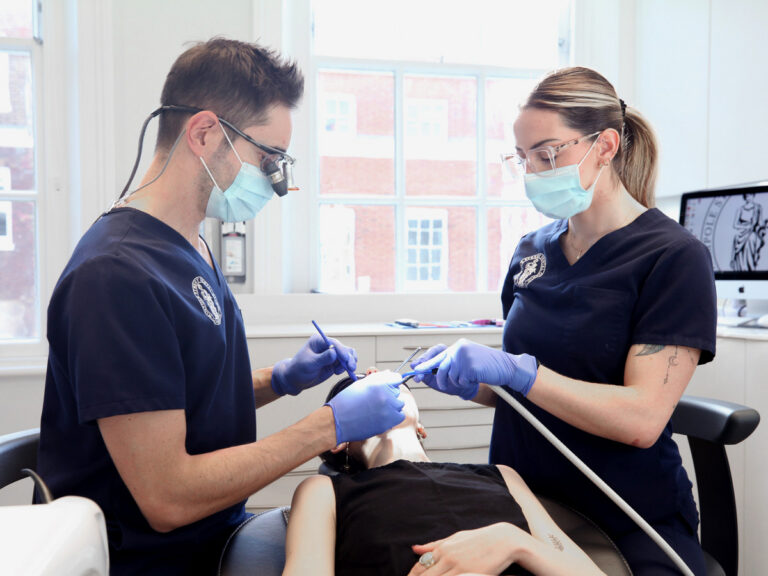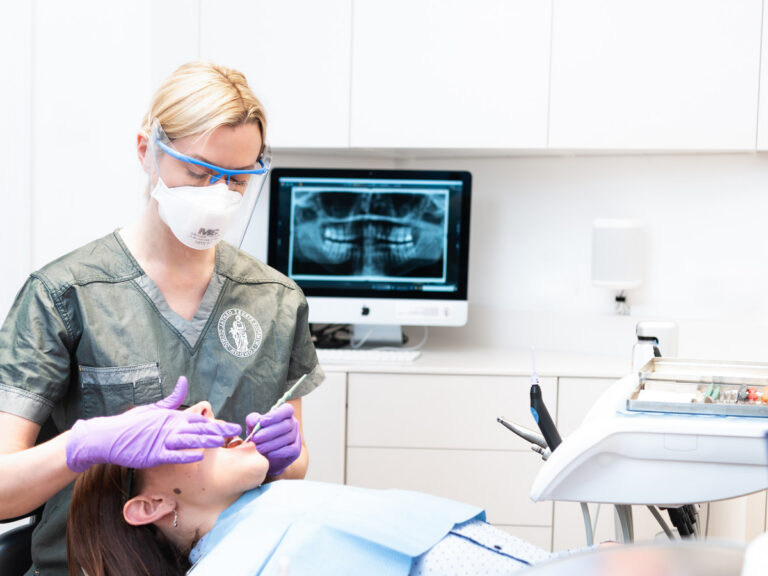








Composite bonding is a cosmetic dental treatment in which a tooth-coloured resin is applied directly to the tooth and shaped by hand to correct minor imperfections. In most cases little or no natural tooth structure is removed, which makes it one of the most conservative cosmetic treatments available. This is a particular advantage for younger adults, for whom preserving healthy enamel is an important long-term consideration.
Composite bonding is frequently the first cosmetic treatment a younger patient undertakes, as it allows meaningful improvement while keeping future options open. At Wimpole Street Dental Clinic it is carried out by Dr Raul Costa and Prof Dr Christian Mehl, who specialise in cosmetic and restorative dentistry.
What composite bonding involves
The tooth surface is lightly prepared and a bonding agent applied, after which the composite resin is placed in layers, shaped and cured with a light. The material is matched to the natural tooth shade and polished to a natural finish. Treatment is usually completed in a single appointment, with no laboratory stage and, in most cases, no need for drilling or local anaesthetic.
What composite bonding can correct
- Chips and small fractures on the front teeth
- Small gaps between teeth
- Uneven or worn edges
- Slightly misshapen teeth
- Minor discolouration that does not resolve with whitening alone
Why it is well suited to younger adults
It preserves the natural tooth
Because little or no enamel is removed in most cases, the treatment is minimally invasive, which is significant for patients who have many years of dental function ahead of them.
It is completed quickly
Most bonding is carried out in a single visit, with no laboratory wait and no temporary phase.
It is a considered first step
As a first cosmetic treatment, bonding offers a lower-commitment way to address specific concerns, and it can be added to, adjusted or refreshed over time.
How it compares with veneers
Veneers can achieve more substantial and longer-lasting changes, but they generally require more preparation of the tooth and represent a greater commitment. For younger patients with healthy teeth and relatively minor concerns, bonding is often the more appropriate choice initially, with veneers considered later if priorities change.
Caring for bonded teeth
Composite bonding is durable but not indestructible. It can chip or stain over time, particularly with habits such as nail-biting, using the teeth to open packaging, or frequent consumption of coffee, tea and red wine. With good oral hygiene, sensible habits and regular hygiene appointments, bonding maintains its appearance well and can be polished or repaired as required.
The cost of composite bonding
| Treatment | From |
|---|---|
| New patient consultation (including X-rays and estimate) | £240 |
| Composite bonding, per tooth | £390 |
| Composite veneer, per tooth | £600 |
Most patients treat several front teeth together, so the total depends on the number of teeth involved. Composite bonding typically lasts around five to ten years.
Prices are indicative and kept in line with our current fee list, and every treatment plan is individually assessed, so your exact quote is confirmed at your consultation. Finance is available through Tabeo on treatments over £1,000 and up to £30,000, and a one-year interest-free payment plan is also offered. Full details are on the fees and finance page.
Frequently asked questions
What is composite bonding?
Composite bonding is a treatment in which a tooth-coloured resin is applied to the tooth and sculpted to correct minor imperfections such as chips, gaps and uneven edges. It is usually completed in a single appointment.
Is composite bonding suitable for younger teeth?
Yes. Because it usually involves little or no removal of enamel, it is one of the most tooth-conserving cosmetic options, which makes it well suited to younger adults with otherwise healthy teeth.
Does the treatment involve drilling or injections?
In most cases, no. Composite is added to the surface of the tooth rather than removed from it, so drilling and local anaesthetic are usually not required.
How much does composite bonding cost?
Bonding is from £390 per tooth. As most patients treat several front teeth, the total depends on the number involved and is confirmed at the consultation.
How long does composite bonding last?
With good care it typically lasts around five to ten years before it requires refreshing or repair. Its lifespan depends on diet, habits and oral hygiene.
Does composite bonding damage the teeth?
In most cases very little or no natural tooth is removed, so it is a conservative treatment. This is one of the principal reasons it is favoured for younger patients.
Can composite bonding close gaps between teeth?
Yes. Closing small gaps between the front teeth is one of the most common uses of composite bonding, and it can often be completed in a single visit.
Will the bonding stain over time?
It can, particularly with frequent coffee, tea, red wine or smoking. Good oral hygiene and regular hygiene appointments help maintain its appearance, and the surface can be polished if required.
Should I choose bonding or veneers?
For minor concerns and a lower commitment, bonding is often the more appropriate first step. Veneers are better suited to more substantial changes and last longer, but involve more preparation. The recommendation is based on the individual case.
Can composite bonding be removed or reversed?
Because little or no natural tooth is altered, bonding is considered a reversible treatment in principle, and the composite can generally be removed or replaced if required.