







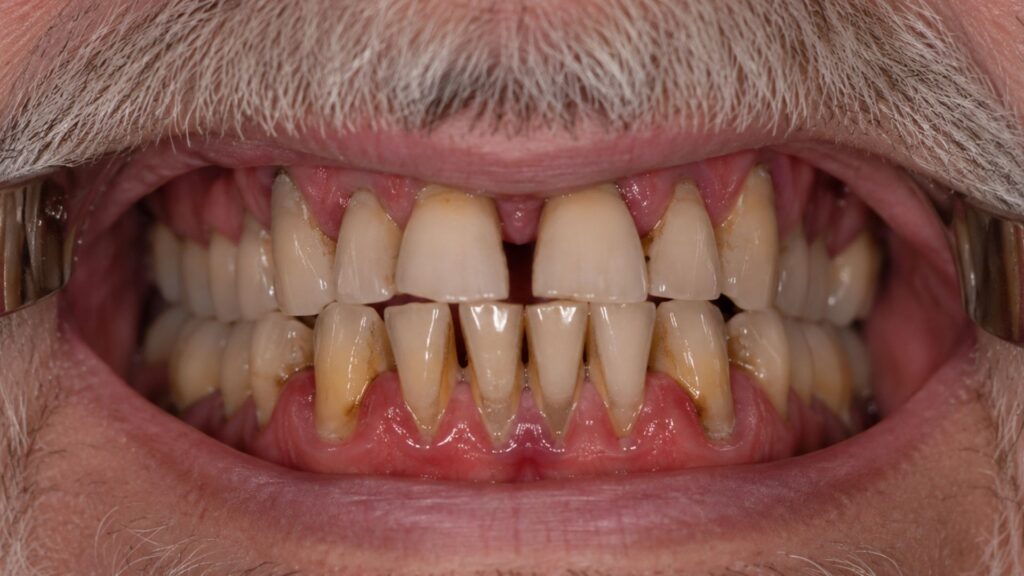


What is the connection between diabetes and periodontitis?
Diabetes and periodontitis have a strong two way relationship. People with diabetes are significantly more likely to develop gum disease, and gum disease itself can make diabetes harder to control. This connection is now so widely recognised that periodontitis is considered one of the key complications of diabetes, alongside kidney disease, eye problems and cardiovascular issues.
Periodontitis is a chronic inflammatory disease affecting the gums and supporting structures around the teeth. It begins with plaque accumulating around the gum line. If not removed, bacteria within the plaque trigger inflammation. Over time, this inflammation damages the tissues holding the teeth in place, leading to gum recession, bone loss and, eventually, loose teeth.
In people with diabetes, the body’s ability to fight infection is reduced, and healing occurs more slowly. High blood sugar can also change the way gum tissues respond to bacteria. As a result, gum disease progresses more quickly and becomes more difficult to manage. At the same time, untreated gum disease increases overall inflammation in the body, which can make regulating blood sugar levels more difficult.
Understanding this two way relationship is essential. Treating gum disease can help improve diabetic control, and good diabetic management can help stabilise the gums. Both systems work best when managed together.
Why diabetes increases the risk of gum disease
There are several biological reasons why diabetes makes gum disease more likely and more severe.
Reduced ability to fight infection
High blood sugar affects the function of white blood cells, which are the body’s main defence against bacteria. When these cells cannot respond effectively:
- Bacteria in plaque multiply more rapidly.
- Infections in the gums may persist for longer.
- The body struggles to repair inflamed gum tissues.
- Gum disease can progress even with mild plaque.
This impaired immune response means early gum inflammation can escalate quickly into more serious periodontitis.
Reduced blood supply to the gums
Diabetes can cause thickening of blood vessel walls over time. When this occurs in the small vessels that supply nutrients to the gums:
- Oxygen and nutrients reach the tissues more slowly.
- Waste products from infection are cleared less efficiently.
- Healing is delayed after inflammation or injury.
- The gums become more vulnerable to bacterial damage.
Healthy gums rely on an excellent blood supply, so reduced circulation increases the risk of disease.
Higher glucose levels in saliva
People with poorly controlled diabetes often have elevated glucose in their saliva. This creates an environment where harmful bacteria thrive. These bacteria produce acids and toxins that irritate the gums and deepen gum pockets.
Increased inflammation throughout the body
Diabetes increases inflammatory markers in the bloodstream. This makes the gums more reactive to plaque bacteria, accelerating the inflammatory cycle that leads to tissue destruction and bone loss.
Dry mouth (xerostomia)
Diabetes often reduces saliva production, especially when blood sugar is poorly controlled.
Lower saliva flow:
- Allows plaque to build up more easily.
- Increases the risk of decay.
- Reduces the natural cleansing action of saliva.
- Allows bacteria to multiply uninterrupted.
Dry mouth is one of the most overlooked contributors to gum problems in diabetic patients.
How gum disease affects diabetes control
The relationship between diabetes and periodontitis works both ways. Gum disease can increase systemic inflammation throughout the body. When inflammatory chemicals enter the bloodstream, they can:
- Make the body less responsive to insulin.
- Make blood sugar more difficult to control.
- Increase the risk of diabetic complications.
- Worsen HbA1c results (a measure of long term blood sugar).
This means that untreated periodontitis is not just a dental issue. It can play a significant role in the overall management of diabetes.
Research shows that treating gum disease can lead to measurable improvements in blood sugar control, comparable to adding a second diabetes medication in some patients.
Symptoms
People with diabetes should be especially alert to early signs of gum disease, as the condition may develop faster and with fewer obvious symptoms.
Common symptoms include:
Red, swollen or tender gums
The earliest sign of gum inflammation caused by plaque bacteria and the body’s exaggerated inflammatory response.
Bleeding when brushing or flossing
A sign that the gum tissue is inflamed and fragile. Blood sugar affects the structural integrity of gums, making them bleed more easily.
Persistent bad breath
Gum pockets trap bacteria and debris. These release strong smelling sulphur compounds.
A bad taste or metallic taste
Often due to bacteria breaking down proteins within the gum pockets.
Gum recession
The gums slowly pull away from the teeth, exposing the roots.
Loose teeth or changes in how your teeth feel when biting
As the supporting bone weakens, the teeth can shift position.
Spaces developing between teeth
These can trap food and worsen inflammation.
Pus between the teeth and gums Indicates active infection.
Dry mouth
Common in poorly controlled diabetes and strongly linked to gum inflammation.
Unfortunately, advanced gum disease is often painless. This means patients may not realise the severity until significant damage has occurred. For people with diabetes, regular dental assessments are essential for early detection.
Diagnosis
During a dental examination, the dentist or hygienist will:
Assess gum health visually
Looking for swelling, redness, recession and areas of inflammation.
Measure periodontal pockets
A small probe is used to measure the space between the gum and tooth. Healthy gums measure between 1 and 3 mm. Numbers above 4 mm indicate gum disease, and deeper pockets suggest more advanced periodontitis.
Check for bleeding
Bleeding indicates active inflammation and bacterial activity.
Review plaque levels
High levels of plaque increase the risk of further infection.
Inspect for tartar build up
Hardened plaque contributes significantly to gum disease and cannot be removed at home.
Take dental X rays
These allow assessment of bone loss around the teeth.
Discuss diabetic history
Blood sugar control and medical history influence both risk and treatment planning.
Evaluate dry mouth
Reduced saliva flow often complicates gum disease.
Combining these findings allows the dentist to classify the severity of periodontitis and plan treatment accordingly.
Treatment and management
The goal of treatment is to reduce inflammation, remove bacterial deposits, stabilise the gums and support better diabetic control.
Professional periodontal cleaning
The first stage is usually deep cleaning (also called scaling and root surface debridement). This involves:
- Removing plaque and tartar from above and below the gum line.
- Smoothing root surfaces to help gums reattach.
- Reducing bacterial load within gum pockets.
- Improving oxygen flow to the gums, reducing harmful anaerobic bacteria.
Deep cleaning may require multiple appointments and sometimes local anaesthetic for comfort.
Ongoing periodontal maintenance
People with diabetes generally benefit from more frequent hygiene appointments, often every 3 months rather than 6. This helps keep bacteria levels low and prevents gum disease from returning.
Treating infections
If gum infections are present:
- Local antibiotic gels may be placed inside gum pockets.
- Antibiotic tablets may be used in more severe cases.
- Special antibacterial mouth rinses may be recommended for short term use.
Managing dry mouth
Treatment options include:
- Increasing water intake
- Sugar free gum to stimulate saliva
- Saliva substitutes
- Hydrating gels
- Avoiding alcoholbased mouthwashes
- Using a humidifier at night
- Adjusting medications (with GP support)
Managing dry mouth protects gums from further breakdown.
Treating tooth decay
Decay is more common in people with diabetes due to reduced saliva. Cavities should be filled promptly to prevent infection spreading to the gums.
Improving oral hygiene at home
Patients are shown:
- Correct brushing technique
- How to clean between teeth with floss or interdental brushes
- How to clean under bridges or around implants
- Techniques for managing dry mouth at home
- The importance of twice daily plaque removal
Small improvements in daily hygiene can make a significant difference when combined with professional care.
Restoring severely affected teeth
In advanced cases:
- Teeth with severe bone loss may need extraction
- Missing teeth can be replaced with bridges, dentures or implants
- Gum grafting may be considered for recession
- Regenerative periodontal procedures may help rebuild lost bone
Supporting diabetic control
Improved gum health often contributes to better blood sugar regulation. Coordinated care between dentists and GPs is beneficial in complex cases.
Prevention and self-care
People with diabetes can reduce their risk of gum disease significantly by:
Maintaining excellent blood sugar control
Keeping blood sugar stable helps reduce inflammation and improves gum healing.
Brushing twice daily for at least two minutes
Removes plaque before it can trigger inflammation.
Cleaning between teeth every day
Interdental cleaning removes bacteria from areas brushing cannot reach.
Managing dry mouth proactively
Water intake, saliva substitutes and nasal breathing all help support oral health.
Stopping smoking
Smoking reduces blood flow to the gums and significantly worsens diabetes related gum problems.
Visiting the dentist regularly
More frequent checkups help detect and treat gum changes early.
Maintaining a balanced diet
High sugar intake increases plaque formation. A balanced diet supports stable blood sugar and oral health.
Monitoring for early signs
Bleeding gums, bad taste, dry mouth or loose teeth should never be ignored.
With consistent care, gum disease can be stabilised even in patients with long term diabetes.
When to seek urgent dental care
People with diabetes should seek prompt dental care if they notice:
Bleeding gums that last more than a few days
This may be an early sign of active periodontitis.
Persistent bad breath or bad taste
These may indicate deep gum pockets or infection.
Swelling or pus around the gums
Requires urgent attention as infections can progress more quickly in diabetic patients.
Loose teeth or sudden gap formation A sign of progressive bone loss.
Pain when chewing
Could indicate infection, abscess or mobility.
Dry mouth that becomes severe This can rapidly worsen gum disease.
Ulcers that do not heal
Slow healing may signal poor blood sugar control or early infection.
Rapid treatment helps protect the teeth and stabilise diabetic control.